You are three months pregnant. The nausea is real. The exhaustion is real. And the only thing your body is asking for quietly, persistently is a bowl of something warm and familiar.
That bowl your mother brings. That soup your body has known since childhood. It turns out, it was always doing more than feeding you. It was protecting you.
Nigerian soups are not just cultural comfort. They are, bowl for bowl, some of the most nutrient-dense meals a pregnant woman can eat.
What Does Your Pregnant Body Actually Need?
Pregnancy increases your demand for iron, folate, calcium, protein, and zinc all at once, every single day. Dark green leafy vegetables, citrus fruits, and dried legumes are among the best natural sources of folate, which must reach 600–1,000 micrograms daily throughout pregnancy ¹. Folate prevents neural tube defects. Iron prevents anaemia. Calcium builds your baby’s bones. Most Nigerian soups deliver all three without a label, without a capsule. Mayo Clinic
Which Soups Specifically Help?
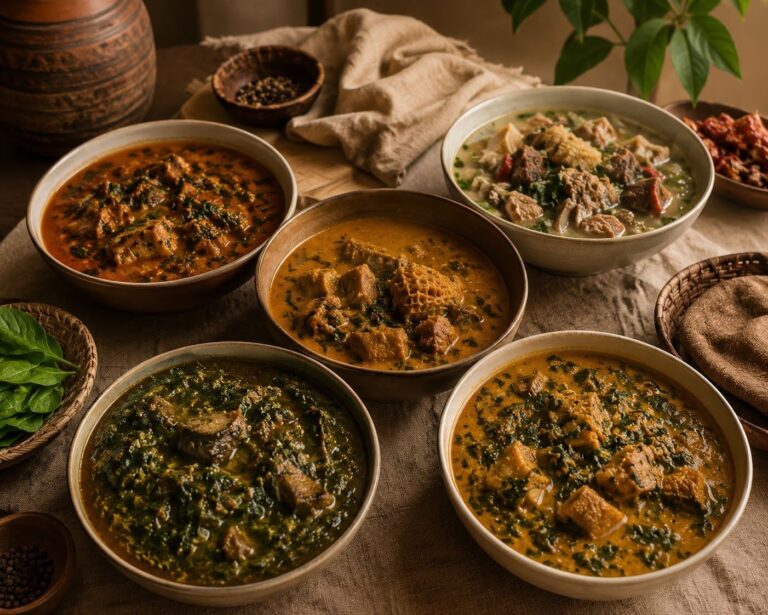
Egusi Soup. Egusi soup contains nutrients that support immune function, including protein, healthy fats, and essential vitamins and minerals. ². When you add ugu leaves and fish, you are building a nutrient-rich meal that combines protein, iron, and healthy fats, especially when paired with staples like fufu, rice, or yam. ScienceDirect
Okra Soup. Okra contributes to dietary folate intake, which is important for fetal neural tube development and helps reduce the risk of neural tube defects when adequate levels are maintained throughout pregnancy. ³. Its slippery texture also relieves the constipation that quietly makes second trimester miserable. PubMed Central
At Mylurah we’re building a digital platform that centers Black women’s reproductive journeys, including culturally sensitive support for Period, Pregnancy and Postpartum. Because representation in care isn’t optional, it’s essential.
Oha Soup. Oha soup is rich in iron, vitamin C, calcium, and folate nutrients that are important during pregnancy when consumed as part of a balanced diet. ⁴. The vitamin C in the oha leaf directly helps your body absorb the iron in the same bowl. That is a built-in nutritional partnership your grandmother did not need a degree to understand. Nigerian Health Blog
Edikaikong / Vegetable Soup. Low intake of dark green leafy vegetables has been associated in some studies with increased risk of adverse pregnancy outcomes, including low birth weight and preterm birth. ⁵. Edikaikong built entirely on waterleaf and ugu is one of the most iron and calcium-rich meals in Nigerian cuisine. It is what new mothers are given for a reason. PubMed Central
In All You Do
Your culture is not a gap in your prenatal care. It is the foundation of it.
Eat your soups. Eat them often. Eat them knowing that every bowl is doing real, documented, biological work for you and the baby growing inside you.
Pregnancy is not the time to abandon your culture at the door of a clinic. It is the time to lean deeper into it with knowledge, with intention, and with a pot on the fire.
These soups have fed generations of Nigerian women through pregnancy long before prenatal vitamins existed. The science is now confirming what tradition already practised. Your kitchen, your market, and your culture were never the problem. They were always part of the answer.
References
- Mayo Clinic. (2024). Pregnancy Diet: Focus on These Essential Nutrients. mayoclinic.org/healthy-lifestyle/pregnancy-week-by-week/in-depth/pregnancy-nutrition/art-20045082
- ScienceDirect. (2017). Elements of Kitchen Toxicology: The Case of Egusi Okra Meal. sciencedirect.com/science/article/pii/S2214750017300392
- Kushi, A. et al. (2023). Impacts of Okra Consumption on the Nutritional Status of Pregnant Women. PMC. pmc.ncbi.nlm.nih.gov/articles/PMC10494605
- Babymigo. (2025). Oha Soup in Pregnancy: Is It Safe? babymigo.com/babymigo/learn/oha-soup-in-pregnancy-is-it-safe
- Zerfu, T.A. et al. (2018). Dairy, Fruits and Dark Green Leafy Vegetables Linked to Lower Adverse Pregnancy Outcomes. PMC. pmc.ncbi.nlm.nih.gov/articles/PMC6148027