
It’s 2:00 AM. Amara is still scrolling through her phone, telling herself she’ll sleep “in just five more minutes.” She has a big presentation tomorrow, a to-do list that never ends, and a body that hasn’t truly rested in weeks. Sound familiar? For millions of people worldwide, this is not a bad night it’s every night.
The Silent Health Crisis We Keep Ignoring
Sleep is not a luxury. It is a biological necessity as essential as food, water, and air. Yet the World Health Organization (WHO) recognizes insufficient sleep as a global public health epidemic, with nearly 1 in 3 adults consistently failing to get the recommended 7–9 hours per night (WHO, 2019).
So what actually happens when we sleep? During deep sleep, your brain flushes out toxic waste products, including proteins linked to Alzheimer’s disease. Your immune system releases protective cytokines. Your heart rate slows, allowing cardiovascular repair. Sleep is, in every sense, your body’s nightly maintenance system.
When that system is disrupted, the consequences go far beyond morning grogginess.
What Sleep Deprivation Really Costs You
Chronic poor sleep is quietly connected to some of the most serious health conditions known to medicine:
- Heart disease and stroke: Adults sleeping fewer than 6 hours per night have a significantly higher risk of cardiovascular events (American Heart Association, 2021).
- Type 2 diabetes: Sleep loss impairs insulin regulation, increasing metabolic risk (Spiegel et al., The Lancet, 1999).
- Mental health disorders: The CDC reports that people with insomnia are 10 times more likely to develop clinical depression.
- Weakened immunity: Just one week of poor sleep can reduce immune cell activity by up to 70% (Walker, Why We Sleep, 2017).
Beyond physical health, sleep deprivation clouds judgment, erodes emotional resilience, reduces productivity, and strains relationships. The person who “pushes through” on four hours of sleep isn’t performing at their best science confirms they only believe they are.
At Mylurah we’re building a digital platform that centers Black women’s reproductive journeys, including culturally sensitive support for Period, Pregnancy and Postpartum. Because representation in care isn’t optional, it’s essential.
During Day 2 of MyLurah Wellness Challenge
Dr Joy Uchendu mention how important sleep is to our health, she also advice each community members to be intentional about their sleep routine
“Clearly, a major reason why we struggle with sleep is because we don’t have a specific time frame we sleep. Today, decide a time you would like to go to bed and stick to it.”
Still in the Community Chat of that day, she discussed about the important of sleep to woman Hormones
What Lack of Sleep Really Does to a Woman’s Hormones
Sleep is a good form of hormone therapy for your body. When you don’t get enough of it, your hormones start to fall out of balance, and your body will show you signs.
Which may include:
1. Your stress hormone (cortisol) increases
You may feel more anxious, overwhelmed, and even notice stubborn belly fat.
2. Your female hormones get disrupted
Poor sleep can affect estrogen & progesterone, leading to irregular periods, worse PMS, or hormonal imbalance.
3. Your hunger hormones go wild
You’ll crave more sugar and carbs, feel less full, and may start gaining weight.
4. Your body struggles with blood sugar
This can increase the risk of weight gain and hormonal conditions over time.
5. Your energy & metabolism drop
You feel tired, unmotivated, and it becomes harder to lose weight.
💡 What you can start doing today:
- Aim for 7–9 hours of sleep
- Sleep and wake up at the same time
- Reduce screen time before bed
- Avoid late caffeine
- Get morning sunlight
Take your sleep seriously. It’s part of your health, not a luxury.
Simple, Evidence Based Steps Toward Better Sleep
The good news? Sleep is a skill you can rebuild. Start here:
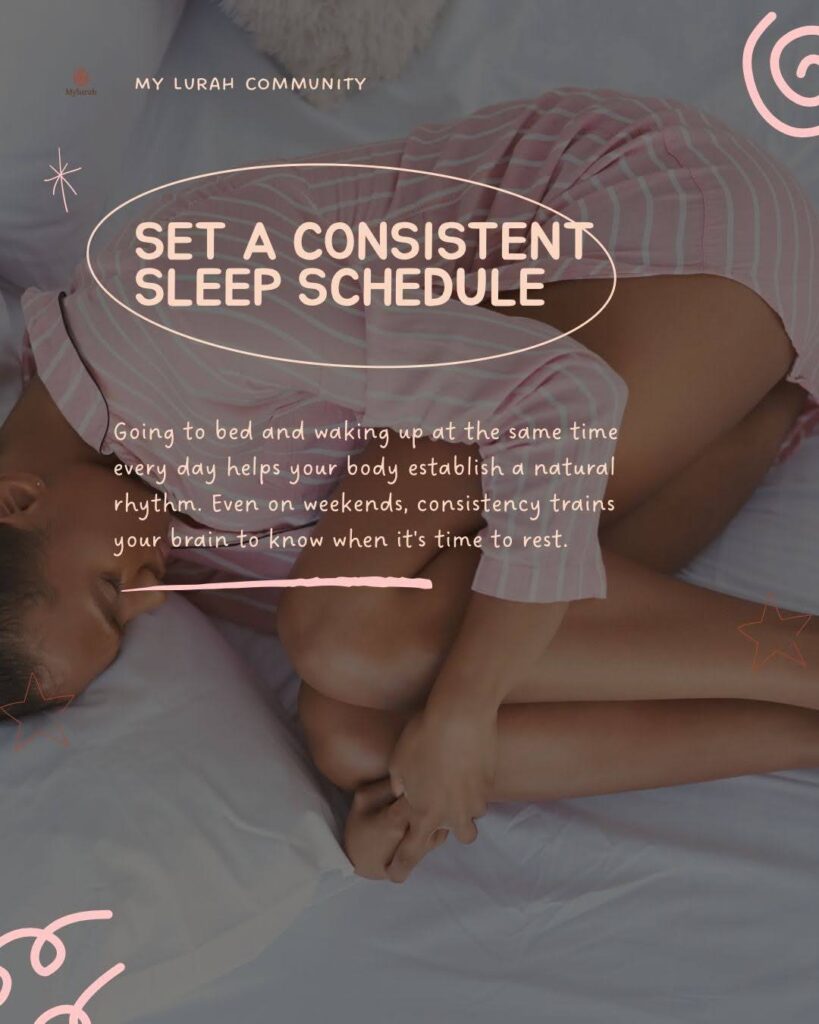
- Set a consistent sleep schedule: even on weekends. Your circadian rhythm thrives on routine.
- Create a wind-down ritual: dim lights, put away screens 60 minutes before bed, and try light stretching or reading.
- Cool your environment: the ideal sleep temperature is between 60–67°F (15–19°C).
- Limit caffeine after 2:00 PM: caffeine has a half-life of 5–7 hours and disrupts deep sleep stages.
- Seek help when needed: if sleep problems persist beyond 3 weeks, consult a healthcare provider. Cognitive Behavioral Therapy for Insomnia (CBT-I) is a proven, drug-free first-line treatment.
You Deserve Rest And It Starts Tonight
Reclaiming your sleep is not about perfection. It’s about choosing, one night at a time, to honor the body that carries you through every demand of life. The science is clear: sleep is not where you lose time it’s where you find health.
Rest well. Live fully.
References
- World Health Organization. (2019). Sleep and Health. WHO Press.
- American Heart Association. (2021). Sleep Duration and Quality: Impact on Lifestyle Behaviors and Cardiometabolic Health. Circulation, 144(18).
- Spiegel, K., Leproult, R., & Van Cauter, E. (1999). Impact of sleep debt on metabolic and endocrine function. The Lancet, 354(9188), 1435–1439.
- Centers for Disease Control and Prevention. (2022). Sleep and Sleep Disorders. cdc.gov/sleep
- Walker, M. (2017). Why We Sleep: Unlocking the Power of Sleep and Dreams. Scribner.