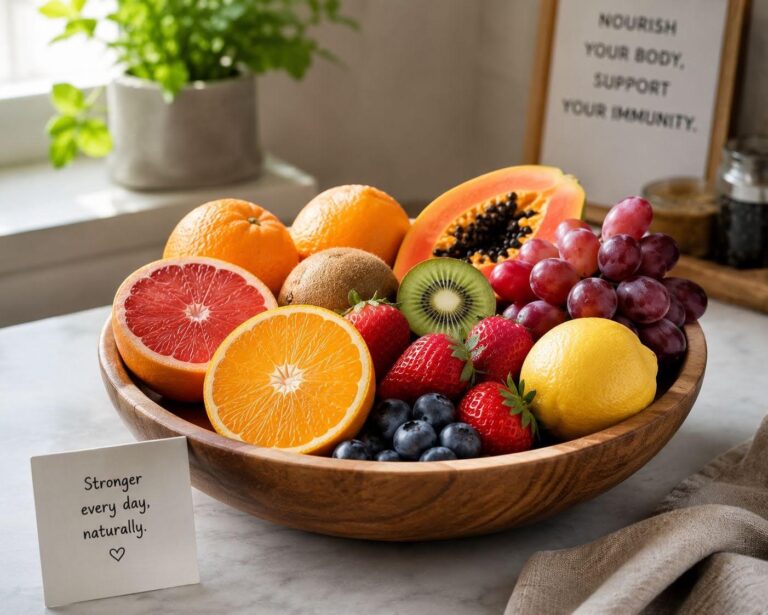
Your body is doing the most extraordinary thing it has ever done. Here is how to feed it accordingly.
There is a particular kind of tired that comes with growing a life or having just brought one into the world.
It is not laziness. It is not weakness. It is your body running at full capacity, redirecting every resource it has toward something bigger than itself. Your immune system, which normally works quietly in the background, is now doing double duty protecting you and, if you are pregnant, protecting your baby too.
And yet, this is exactly the season when most women eat the least intentionally. The nausea, the exhaustion, the blur of new motherhood all of it makes it easy to reach for whatever is closest rather than whatever is best.
This is not a lecture. This is a reminder that some of the most powerful immune support available to you right now does not come in a capsule. It grows on trees. It is sweet. It is colourful. And your body knows exactly what to do with it.
Why Immunity Matters More Now Than Ever
Pregnancy involves complex changes in immune function that help support both maternal health and fetal development. This means you are more vulnerable to infections during this season than at almost any other point in your life.
Postpartum, your body is in full recovery mode. Tissue is healing. Hormones are recalibrating. If you breastfed, you are also transferring immune compounds to your baby through your milk. Vitamins A, C, E, carotenoids, and flavonoids found in fruits act as antioxidants that scavenge oxidative free radicals and help lower inflammatory biomarkers in the body all of which your recovering body urgently needs. nih
This is the season to eat with intention. These five fruits are where to start.
1. Citrus Fruits: Such as Oranges, Lemons, Limes, Grapefruit
The vitamin C in citrus is not just for cold season. During pregnancy and postpartum, it is one of your most important daily allies.
Citrus fruits are a rich source of vitamin C and folate, both of which play roles in sustaining the integrity of immunological barriers and supporting the function of many types of immune cells including phagocytes, natural killer cells, T-cells, and B-cells. nih
Folate is particularly significant here it is the same nutrient recommended in the first trimester to support your baby’s neural tube development. Citrus delivers it naturally, alongside immune support, in a single piece of fruit.
Important bioactive compounds in citrus including hesperidin have been shown in human trials to produce measurable reductions in inflammatory markers. For Black women, who carry a disproportionate burden of pregnancy-related inflammation and associated risk, this matters more than a general health tip. It is targeted, accessible nutrition. nih
For pregnancy: Add lemon to warm water every morning. Snack on oranges between meals to manage nausea and keep vitamin C levels steady.
For postpartum: Fresh orange juice with breakfast supports both energy and immune recovery. Keep limes on hand to brighten soups, stews, and rice dishes.
At Mylurah we’re building a digital platform that centers Black women’s reproductive journeys, including culturally sensitive support for Period, Pregnancy and Postpartum. Because representation in care isn’t optional, it’s essential.
2. Blueberries: For You and For Baby
Blueberries are small enough to ignore and powerful enough that you should not.
Research on anthocyanins and polyphenols extracted from blueberries found significant effects on macrophage activity, lymphocyte transformation capacity, and antioxidant markers in the body all indicators of improved immune function. PubMed
During pregnancy, your lymphocytes the immune cells that remember past infections and protect you from future ones are under pressure. Blueberries contain compounds that may support healthy immune function and help reduce oxidative stress.
Blueberries are nutrient-dense fruits rich in phenolic compounds with notable biological potential, including the capacity to counteract oxidative stress markers and suppress uncontrolled pro-inflammatory responses. nih
Postpartum inflammation is real, documented, and often dismissed. The swelling, the tenderness, the joint aches these are inflammatory responses your body is managing. Blueberries give it a natural tool to do that work more efficiently.
For pregnancy: Blend into smoothies with banana and oats for a nausea-friendly breakfast.
For postpartum: Keep a bowl washed and ready. The easiest immune support is the one you can eat with one hand while holding a baby.
3. Papaya (Paw-Paw): The Postpartum Fruit
In many West African and Caribbean traditions, papaya has been given to new mothers for generations. Science is now explaining why that wisdom was right.
A single cup of papaya can provide over 200% of your daily required vitamin C intake — supporting immunity and healthy skin at the same time. Redcliffelabs
Skin matters postpartum. Your body’s physical barriers skin, mucous membranes are part of your immune system. As your body heals from birth, keeping those barriers strong is not cosmetic. It is protective.
The antioxidants in papaya help neutralise harmful free radicals, reducing oxidative stress and lowering the risk of chronic disease, while its anti-inflammatory properties help reduce the chronic inflammation that can quietly weaken immunity over time. ManipalCigna
Papaya also contains papain, an enzyme that supports digestion important during postpartum when gut health is disrupted and nutrient absorption is critical for recovery. A body that cannot absorb nutrients cannot heal.
For pregnancy: Eat ripe papaya only avoid unripe papaya during pregnancy as it contains high levels of latex which can trigger contractions.
For postpartum: Eat fresh with lime juice. Blend into a smoothie with ginger to support digestion and reduce inflammation simultaneously.
4. Watermelon: Immunity Through Hydration
Dehydration is one of the most common and most underestimated threats to immune health during pregnancy and postpartum especially for breastfeeding mothers, whose fluid demands increase significantly.
Watermelon is one of the richest natural sources of lycopene, a powerful antioxidant with documented anti-inflammatory effects. It also contains vitamins A, B6, and C, all of which contribute to immune cell function. But its most immediate gift during this season is hydration.
Your mucous membranes the lining of your nose, mouth, throat, and gut are your body’s first physical line of defence against infection. Supplementing the diet with an appropriate amount of fruits daily supports the body’s natural defence by strengthening the immune response through phytochemicals and bioactive compounds that enhance immunity and reduce oxidative stress. A well-hydrated mucous membrane is a working one. A dehydrated one lets things through. doaj
For pregnancy: Eat chilled watermelon to manage swelling and heat, especially in the third trimester.
For postpartum: Blend with mint and cucumber for a hydrating drink that also supports milk production.
5. Guava: West Africa’s Best-Kept Immune Secret
If you are in Nigeria or anywhere across West Africa, you have access to one of the most nutrient-dense immune fruits on the planet, often growing right outside your door.
Guava contains roughly four times the vitamin C of an orange by weight. It is also rich in quercetin a flavonoid with both anti-inflammatory and antiviral properties making it especially relevant during the vulnerability of pregnancy and early postpartum.
Vitamin C is maintained at high levels in most immune cells and can affect many aspects of the immune response including how quickly and effectively those cells mobilise when the body encounters a threat. Guava delivers this at levels few other fruits can match. PubMed Central
Guava leaf tea has also been studied for antiviral properties, making it a culturally familiar remedy with a growing body of scientific support behind it.
For pregnancy: Eat fresh guava as a snack. It is low in calories, high in fibre, and helps manage blood sugar fluctuations common in pregnancy.
For postpartum: Drink guava leaf tea to support recovery, reduce inflammation, and tap into an immune tradition your grandmothers already knew.
References
- Miles, E.A. & Calder, P.C. (2021). Effects of Citrus Fruit Juices and Their Bioactive Components on Inflammation and Immunity. Frontiers in Immunology. pmc.ncbi.nlm.nih.gov/articles/PMC8264544
- Pullar, J.M. et al. (2018). Vitamin C and Immune Cell Function in Inflammation and Cancer. Biochemical Society Transactions. PMC. pmc.ncbi.nlm.nih.gov/articles/PMC6195639
- Wang, Y. et al. (2021). Biological Activity of Anthocyanins and Polyphenols in Blueberry. PubMed. pubmed.ncbi.nlm.nih.gov/33462807
- Rocha, S. et al. (2022). Cherries and Blueberries-Based Beverages: Functional Foods with Immune Booster Properties. PMC. pmc.ncbi.nlm.nih.gov/articles/PMC9145489
- Singh, D.N. et al. (2023). Common Foods for Boosting Human Immunity: A Review. Food Science & Nutrition. PMC. pmc.ncbi.nlm.nih.gov/articles/PMC10630845
- Maheshwari, S. et al. (2022). Immunomodulatory Potential of Phytochemicals and Bioactive Compounds of Fruits. Food Frontiers. doi.org/10.1002/fft2.129