
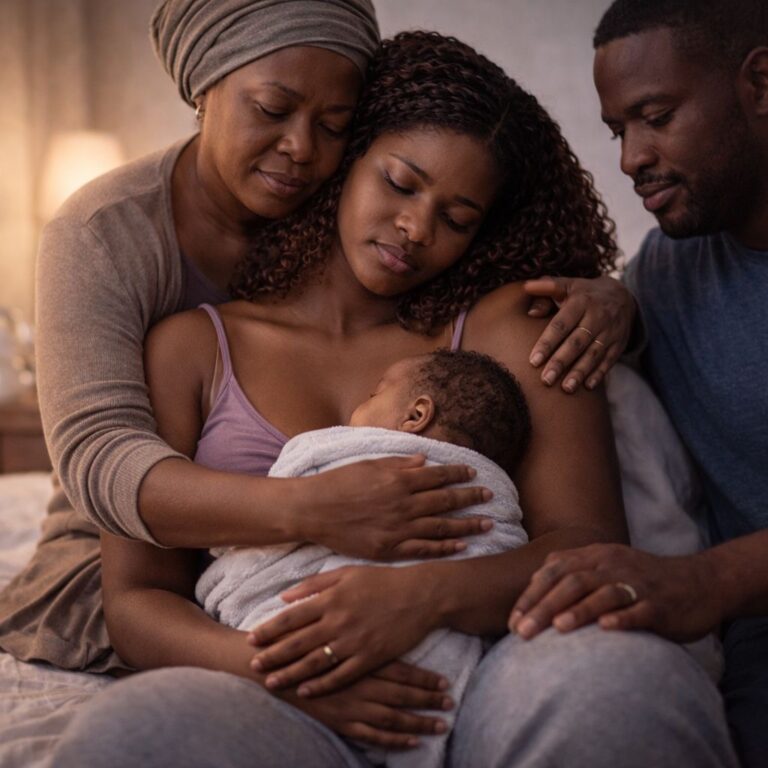
The “fourth trimester,” the critical 12 weeks (and sometimes beyond) after birth is often spoken of as a recovery period for new mothers, yet for many Black women this phase is under-supported, under-resourced, and overlooked.
The intersection of racial disparities, structural barriers, and cultural invisibility can make this postpartum period especially precarious for Black women.
Their bodies are healing, the baby is adjusting, and yet the support systems designed to safeguard both are too often absent.
Recognizing the unique needs of Black women in the fourth trimester is not simply a matter of fairness, it is a matter of health equity, maternal safety, and community resilience.
Black women bear the brunt of this crisis not only because of persistent health disparities and stigma but also due to the lack of community rooted care designed to support them. For all mothers, mental health risk doesn’t end at birth, and we cannot continue to overlook women during one of the most vulnerable and overlooked stages of motherhood: the fourth trimester.
By joining MyLurah community group, you can take advantage of the platform and improve your chances of meeting people of like mind who are ready to listen to you and offer solutions anytime.
For many Black women, the most isolating and dangerous chapter comes after birth, in this “fourth” trimester. Lack of follow-up care. Being dismissed when asking for help. No community support system. These aren’t the side effects of motherhood. They’re symptoms of a system that routinely overlooks this postpartum period, where too many Black mothers are left to navigate the most vulnerable chapter of their journey alone.
We see it in the research. Postpartum depression is estimated to impact up to 44% of Black mothers. And, although these rates are higher than their white counterparts, they’re less likely to receive a proper diagnosis.
On top of that, suicide and overdose are the leading cause of death for women in the first year of pregnancy. Black moms are twice as likely to report suicidal ideations. Historically, when women have had babies, all the attention is on the baby, but we’re really driving home the point to them that they’re important too and their health matters.”
By joining MyLurah community group, you can take advantage of the platform and improve your chances of meeting people of like mind who are ready to listen to you and offer solutions anytime.
Important Safety Information
Mylurah is a safe space for African women to track their bodies, understand their health, and feel seen.
At ‘‘Mylurah,” your health, privacy, and safety come first. Our platform provides tools and resources to help African women track their bodies, understand hormonal changes, and recognize symptoms.
We also prioritize your data security. Every piece of information you share with Mylurah is confidential and protected.
We encourage you to use our resources responsibly, stay aware of your body’s signals, and never hesitate to seek medical help when something doesn’t feel right.
In Conclusion
For Black women, the fourth trimester is not a luxury; it is a critical juncture where care, support, and community intersect with profound risk and profound opportunity.
When African and Black women receive the full spectrum of postpartum support physical, emotional, and social they not only heal more fully themselves but give their infants and families a stronger start.
It is time we shift the narrative: postpartum is not just “after the birth,” it is a deeply consequential chapter that deserves as much attention as the pregnancy itself. When we bridge the gaps in care for Black women, we honour their strength, safeguard their health, and affirm their right to thrive.
Also Read:


Pingback: Traditional Postpartum Practices: What’s Safe, What’s Harmful? – Mylurah
Pingback: Cultural Pressures and Breastfeeding: The Black Mother’s Experience – Mylurah