
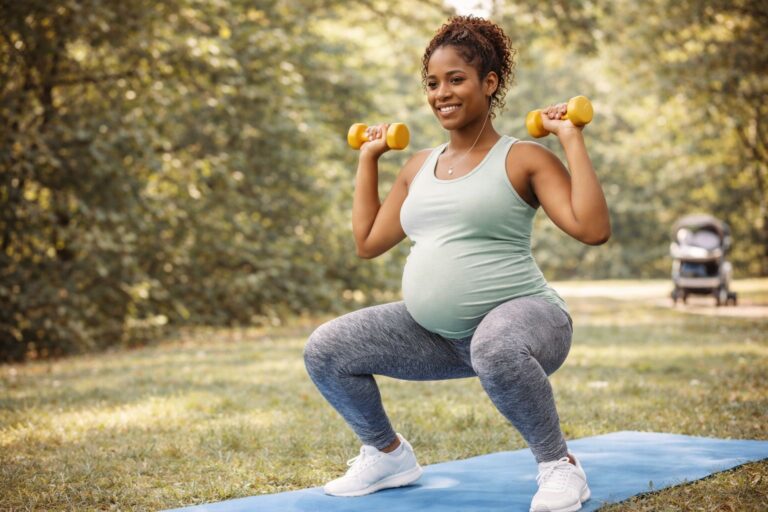
Pregnancy is a beautiful yet delicate journey that transforms every part of a woman’s life body, mind, and heart. As your baby grows, your body works tirelessly, and gentle movement becomes one of the best gifts you can give yourself and your little one.
Safe pregnancy exercises aren’t about pushing your limits; they’re about nurturing your strength, improving your comfort, and preparing you for a healthy delivery. Simple activities like walking, stretching, or prenatal yoga can ease back pain, boost your mood, and help your body adapt to its amazing changes.
It’s encouraging for women, especially Black women whose health challenges are often overlooked, that exercise in pregnancy isn’t a luxury, it’s self-care. With the right guidance, you can move safely, breathe easier, and enjoy every step toward motherhood with confidence and peace.
Key Points:
- What Pregnancy Exercises Means
- Exercise Tips for Pregnancy
- Exercises for a Fitter pregnancy
- How to Do Pelvic Floor Exercises
- Important Safety Information
What Pregnancy Exercises Means
Staying active during pregnancy can offer a variety of benefits, including reducing aches and pains and preventing excessive weight gain. A well-rounded exercise routine should incorporate muscle-strengthening activities in addition to cardiovascular activity, such as walking and swimming.
The following core-focused workouts can assist increase muscular tone, strength, and endurance. These are all aspects of fitness that can help you manage better throughout labor and delivery. Doing these workouts prepares you to be more physically fit once your kid is born.
For the majority of pregnant women, starting slowly and gradually increasing the number of repetitions of a workout each day is effective. To prevent losing your balance and falling, perform the exercises gently and avoid any movements that make you feel unstable.
These activities may not be recommended for those who are pregnant at high risk or who are experiencing pregnancy difficulties. Before you begin, consult a member of your healthcare team to ensure that these activities are safe for you.
By joining MyLurah community group, you can take advantage of the platform and improve your chances of meeting people of like mind who are ready to listen to you and offer solutions anytime.
Exercise Tips for Pregnancy
Do not tire yourself. You may need to slow down as your pregnancy advances or if your maternity team suggests it. If in doubt, check with your maternity team.
As a general rule, you should be able to converse while exercising during pregnant. If you grow breathless when speaking, you are probably exercising too hard. Official activity target, recommend more than 150 mins per week of moderate intensity activity
If you were not active before to becoming pregnant, do not abruptly begin vigorous activity. If you begin an aerobic activity program (such as jogging, swimming, cycling, or aerobics courses), notify the teacher that you are pregnant.
Remember that exercise does not have to be rigorous to be effective.
Exercise Tips When You’re Pregnant:
- Always warm up before exercise and cool down afterwards.
- Try to be active on a daily basis. Walking for 30 minutes per day can suffice, but if that is not feasible, any quantity is preferable to none.
- Avoid intense exertion in hot weather.
- Drink lots of fluids.
- If you go to fitness courses, be sure the teacher is adequately certified and knows you’re pregnant, along with how many weeks pregnant you are.
- You might want to try swimming because the water will support your extra weight. Some local swimming facilities provide aqua-natal lessons with certified teachers. Find your neighborhood swimming pool.
- Exercises with the danger of falling, such as horseback riding, downhill skiing, ice hockey, gymnastics, and cycling, should be done with caution. Falls pose a danger of injury to your baby.
Exercises to avoid in pregnancy
- Sports like scuba diving and dangerous height activities should be avoided.
- Avoid lying flat on your back for extended periods, especially after 16 weeks, since the weight of your bump presses on the main blood artery sending blood back to your heart, which can induce fainting.
- Do not participate in contact sports with a danger of being hit, such as kickboxing, judo, or squash.
- Do not go scuba diving since the baby has no protection from decompression sickness and gas embolism (gas bubbles in the bloodstream).
- Avoid exercising at elevations above 2,500m above sea level since you and your baby may get altitude sickness.
Exercises for a Fitter pregnancy
Try and include the workouts in this section into your everyday regimen if you are pregnant. These exercises will help you handle the extra weight of pregnancy by strengthening your muscles.
They will also help you feel better overall, strengthen your joints, increase circulation, and reduce back pain.
Stomach-strengthening exercises
As your baby grows, you may notice a rise in the hollow in your lower back, which can cause back pain.
These exercises strengthen stomach (abdominal) muscles and may alleviate backache, which can be a concern during pregnancy.
- Begin in a box position (on all fours) with knees under hips, hands under shoulders, fingers pointing forward, and abdominals elevated to maintain a straight back.
- Pull in your abdominal muscles and elevate your back to the ceiling, curving your trunk and letting your head slowly relax forward. Never let your elbows lock.
- Hold for a few seconds and gently return to the box position.
- Avoid hollowing your back and maintain a straight/neutral posture.
- Perform this slowly and methodically 10 times, working your muscles hard and moving your back gently.
- Just move your back as far as you can comfortably.
Pelvic Tilt Exercises
- Stand with your shoulders and bottom against the wall.
- Keep your knees soft.
- Pull your stomach button towards your spine until your back is flat against the wall: Hold for four seconds, then release.
- Repeat up to ten times.
Pelvic Floor Exercises
Pelvic floor exercises serve to strengthen the pelvic floor muscles, which are put under a lot of strain during pregnancy and childbirth. The pelvic floor is made up of layers of muscles that extend like a supporting hammock from the pubic bone (in front) to the end of the spine.
If your pelvic floor muscles are weak, you may leak urine when coughing, sneezing, or straining. This is really common, and there is no reason to be embarrassed. This is referred to as stress incontinence and might last beyond pregnancy.
Strengthen these muscles with pelvic floor workouts. This helps to lessen or prevent stress incontinence after pregnancy.
Pelvic floor exercises are recommended for all pregnant women, even if they are young and do not already suffer from stress incontinence.
How to Do Pelvic Floor Exercises
In addition to these exercises, practice contracting your pelvic floor muscles before and during coughing and sneezing.
- To make yourself comfortable, sit or lie down with your knees bent.
- Squeeze and tense the muscles surrounding your back channel as if you were attempting to stop yourself from peeing and farting, and then relax the muscles.
- When performing pelvic floor exercises, breathe normally.
- Try to do this exercise as fast as possible initially.
- After that, proceed gradually, maintaining the squeezes for as long as you can until unwinding: Attempt to count to ten.
- Try to complete three sets of eight squeezes each day: You might do a set at every meal to aid with your memory.
Important Safety Information
Always get clearance from your pregnancy health provider before you start an exercise routine.
Mylurah is a safe space for African women to track their bodies, understand their health, and feel seen.
At ‘‘Mylurah,” your health, privacy, and safety come first. Our platform provides tools and resources to help African women track their bodies, understand hormonal changes, and recognize symptoms.
We also prioritize your data security. Every piece of information you share with Mylurah is confidential and protected.
We encourage you to use our resources responsibly, stay aware of your body’s signals, and never hesitate to seek medical help when something doesn’t feel right.
In Conclusion
Pregnancy is not just about carrying life, it’s about caring for yourself while you nurture that life within you. Safe exercises help your body stay flexible, your mind calm, and your heart strong for the journey ahead.
Remember, every gentle stretch, every mindful breath, and every step you take is preparing you for a smoother delivery and a healthier recovery.
As a mother-to-be, your body deserves love, patience, and movement that honors its changes. So listen to your body, move safely, and let each exercise remind you of the incredible strength you already carry.
Also Read:


Pingback: Effective African Home Remedies for Morning Sickness – Mylurah
Pingback: Mental Health Shifts During Pregnancy are Real – Mylurah