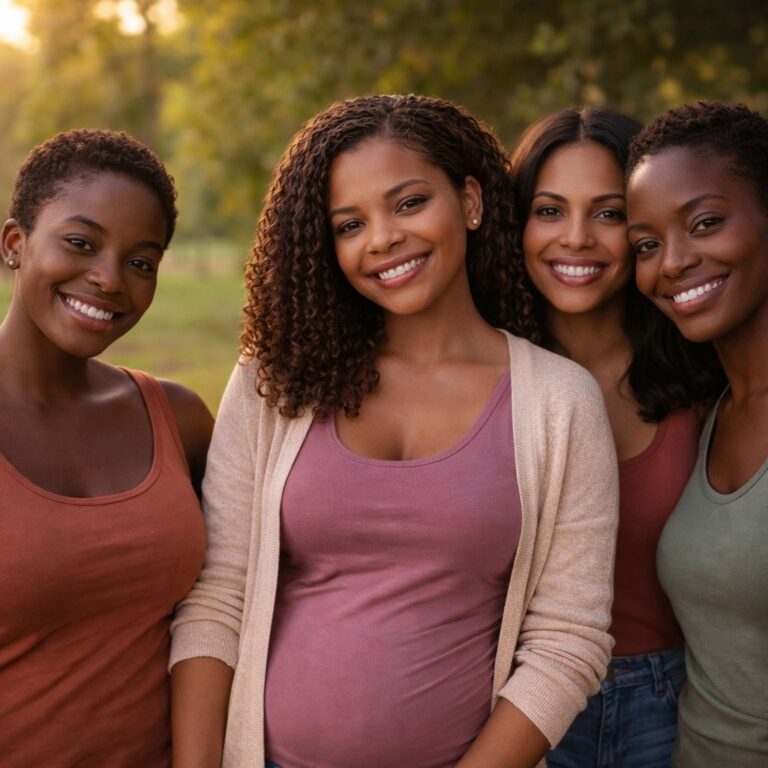
Women’s health equity refers to the principle that every woman, regardless of her race, income, geographic location, age, or social background, deserves equal access to quality healthcare and the opportunity to achieve her highest level of health.
Across the globe, millions of women continue to face significant barriers to receiving adequate medical care, resulting in preventable illness, suffering, and death.
Addressing women’s health equity is not merely a medical concern it is a matter of human rights, social justice, and sustainable development. Understanding the gaps that exist and what can be done to close them is the first step toward meaningful change.
At Mylurah we’re building a digital platform that centers Black women’s reproductive journeys, including culturally sensitive support for Period, Pregnancy and Postpartum. Because representation in care isn’t optional, it’s essential.
Understanding the Gaps in Women’s Health
Women face unique health challenges that are often under-researched, underfunded, and underdiagnosed.
Conditions such as endometriosis, polycystic ovary syndrome (PCOS), cervical cancer, breast cancer, and maternal complications disproportionately affect women yet many of these conditions take years to diagnose due to systemic biases in medical research and clinical practice.
Studies have consistently shown that women’s pain is more likely to be dismissed or undertreated compared to men’s, a pattern that leads to delayed care and worsened health outcomes.
Social Determinants Affecting Women’s Health
Health equity cannot be discussed without addressing the social determinants that shape a woman’s access to care. These include:
- Poverty and economic inequality — Women who cannot afford health insurance or out-of-pocket medical costs often delay or completely forgo necessary treatment.
- Geographic barriers — Women in rural or underserved communities frequently lack access to specialists, reproductive healthcare, and mental health services.
- Education — Limited health literacy can prevent women from recognizing symptoms, seeking timely care, or understanding treatment options.
- Cultural and language barriers — Women from minority or immigrant communities may face discrimination, communication challenges, or distrust of healthcare systems rooted in historical mistreatment.
- Gender-based violence — Women who experience domestic violence or sexual abuse face compounded health risks, including mental health disorders, reproductive health complications, and chronic illness.
Reproductive and Maternal Health
Reproductive health remains one of the most critical areas of women’s health equity. Globally, preventable maternal deaths continue to occur at alarming rates, particularly among Black women and women in low-income regions, who face significantly higher risks of maternal mortality compared to their counterparts. Access to prenatal care, safe delivery services, family planning, and postpartum support remains uneven across different communities.
In many settings, women are also denied autonomy over their reproductive choices, further compromising their health and well-being. Ensuring that every woman has access to comprehensive reproductive healthcare — free from discrimination and coercion — is central to achieving health equity.
Mental Health and Women
Women are disproportionately affected by mental health conditions such as depression, anxiety, and post-traumatic stress disorder (PTSD). Despite this, mental healthcare remains inaccessible to many women due to cost, stigma, or lack of available services. Perinatal mental health — covering depression and anxiety during pregnancy and after childbirth — is a particularly underaddressed area, with many women suffering in silence due to shame or lack of awareness.
What Organisations and Individuals Can Do
Progress toward women’s health equity requires action at multiple levels:
- At the policy level: Governments and health organisations must invest in gender-sensitive healthcare policies, increase funding for women’s health research, and implement programs that target underserved communities.
- At the community level: Community health workers, local clinics, and advocacy groups play a vital role in bridging the gap between women and healthcare systems — particularly in rural and marginalized settings.
- At the individual level: Women are encouraged to know their rights as patients, seek second opinions when necessary, advocate for themselves during medical consultations, maintain routine health screenings, and share health information within their communities.
In All You Do
Women’s health equity is achievable, but it demands deliberate, consistent, and compassionate effort from healthcare providers, policymakers, communities, and individuals alike.
When women are healthy, families are stronger, communities thrive, and societies progress. No woman should be left behind simply because of where she was born, what she earns, or what she looks like.
While the information provided in this article serves as a general guide to understanding women’s health equity, it is important to recognise that every woman’s health journey is unique.
If you or someone you know is experiencing any health concerns whether physical, reproductive, or mental we strongly encourage you to consult a qualified medical professional.
A licensed healthcare provider is best positioned to offer personalised advice, accurate diagnosis, and appropriate treatment. Do not delay seeking professional care when your health requires it.