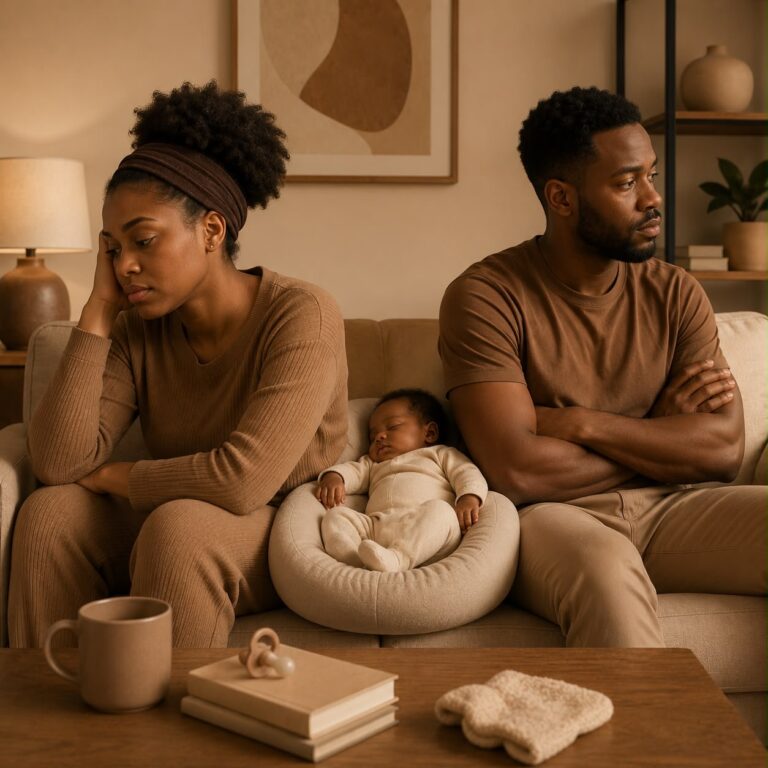
Maya and James had always been that couple spontaneous weekend getaways, long dinner conversations, and easy laughter.
Then their daughter arrived, and somewhere between the 3 a.m. feedings and mountains of laundry, they stopped talking about anything except the baby. Six months in, Maya quietly wondered, where did we go?
If this sounds familiar, you are not alone.
When “We” Becomes Three: Navigating Relationship Changes After Having a Child
Couples often experience a decrease in romantic intimacy, reduced “us-time,” and heightened conflict due to sleep deprivation and shifting roles.
This adjustment while normal requires intentional communication, a fair division of the mental and physical workload, and redefined expectations to rebuild connection.
The Invisible Shift
Becoming a parent is one of life’s greatest joys and one of its most profound disruptions. Research consistently shows that relationship satisfaction declines significantly in the transition to parenthood, with couples reporting reduced intimacy, increased conflict, and emotional distance (Doss et al., 2009).
This isn’t a sign of failure. It is a predictable, documented response to an extraordinary life change.
The causes are layered. Sleep deprivation impairs emotional regulation and empathy. Roles shift sometimes in ways couples never discussed.
Mothers, in particular, often shoulder a disproportionate share of infant care, creating resentment even in loving partnerships (Yavorsky et al., 2015). Add financial pressure, identity shifts, and reduced social support, and the relationship strain becomes understandable.
When It Goes Unaddressed
Ignoring these changes carries real consequences. Persistent relationship conflict creates a stressful home environment that affects infant and child development (Cummings & Davies, 2010).
Parental depression often linked to relationship dissatisfaction can impair bonding with the baby. Couples who don’t actively tend to their relationship are at significantly higher risk of long-term estrangement or separation.
The relationship you protect today directly shapes the family environment your child grows up in.
At MyLurah, we believe every woman deserves to feel informed, supported, and understood throughout every stage of her reproductive journey. From navigating periods and understanding her body to preparing for pregnancy and adjusting to life after birth, we create a safe space for culturally informed education, meaningful conversations, and community support.
What Actually Helps
The good thing is, there is a solution to filling the gap that might lead to changes in a relationship after having a child.
Communicate intentionally. Schedule brief, baby-free check-ins, even for 10 minutes daily. Ask each other: “How are you, really?” (Gottman & Gottman, 2007).
Acknowledge invisible labour. Name and fairly distribute household and caregiving tasks. Equity reduces resentment.
Protect couple time. Even small rituals, a shared cup of tea or a walk after bedtime, reinforce connection.
Seek support early. Couples therapy or perinatal counselling is not a last resort; it is a proactive investment. Brief interventions during the postpartum period have shown lasting positive effects (Doss et al., 2014).
Normalise the struggle. Simply knowing that disconnection is common and temporary reduces shame and blame.
You Are Still “We”
Parenthood changes a relationship. It does not have to diminish it. Many couples report that navigating early parenthood together honestly, imperfectly, and with grace, ultimately deepens their bond in ways they never anticipated.
Maya and James eventually found their rhythm. Not the old one, but a new one, richer and more resilient. Yours is waiting too.
References
- Cummings, E. M., & Davies, P. T. (2010). Marital conflict and children. Guilford Press.
- Doss, B. D., et al. (2009). Journal of Personality and Social Psychology, 96(3), 601–619.
- Doss, B. D., et al. (2014). Journal of Consulting and Clinical Psychology, 82(5), 866–876.
- Gottman, J. M., & Gottman, J. S. (2007). And Baby Makes Three. Crown Publishers.
- Yavorsky, J. E., et al. (2015). Journal of Marriage and Family, 77(2), 338–355.