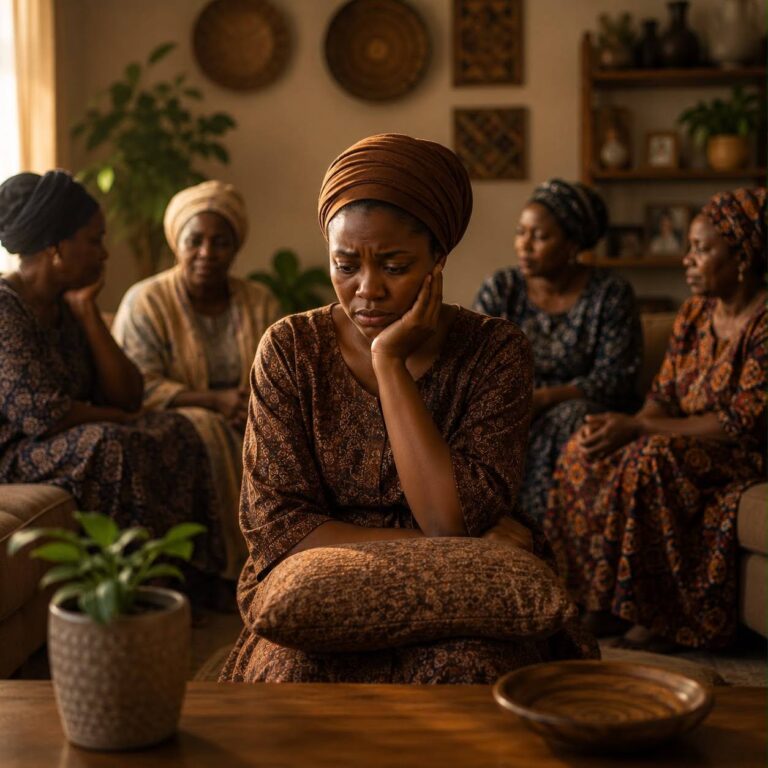
“Why Haven’t You Given Him a Child Yet?”
Ngozi had been married for four years. At every family gathering, someone asked the same question with a knowing smile: “So when are we hearing good news?”
What no one knew was that Ngozi had fibroids and had known for two years. She hadn’t told her husband’s family. She hadn’t even fully told her own mother.
In her community, women who “struggled” to conceive were often quietly blamed, so she carried her diagnosis like a secret, along with the shame she didn’t deserve.
Ngozi’s story repeats itself across African households every day — a medical condition wrapped in silence, mistaken for personal failure.
A Condition Too Common to Stay Hidden
Uterine fibroids are non-cancerous growths that affect a striking number of women, but the burden falls unevenly: Research consistently shows that women of African ancestry have higher rates of fibroids and often develop them at younger ages compared with women of other racial backgrounds.
They are also a major, often overlooked cause of infertility, contributing to an estimated 5–10% of infertility cases worldwide, sometimes by physically blocking the fallopian tubes.
Despite how common they are, awareness remains strikingly low. In Ghana, researchers found that many women don’t recognise fibroid symptoms early and often delay seeking care out of fear of pain or fertility loss, compounded by cultural silence around gynaecological issues.
What Silence Costs Women
When fibroids go undiscussed and undiagnosed, the toll builds across every part of a woman’s life:
- Emotional wellbeing suffers. Women diagnosed with fibroids commonly report depression, anxiety, stress, and isolation made worse when they cannot speak openly about what they’re experiencing.
- Infertility becomes a private grief. In cultures where a woman’s worth is closely tied to childbearing, women who cannot conceive due to fibroids often face significant stigma and psychological distress.
- Care is delayed for years. Advocates note that many Black and African women suffer in silence with fibroid symptoms, which makes it harder to share knowledge and normalise seeking treatment early.
At MyLurah, we believe every woman deserves to feel informed, supported, and understood throughout every stage of her reproductive journey. From navigating periods and understanding her body to preparing for pregnancy and adjusting to life after birth, we create a safe space for culturally informed education, meaningful conversations, and community support.
Breaking the Silence Around Fibroids
Progress starts with treating fibroids as a medical condition to be managed, not a shame to be hidden.
Talk about symptoms early. Heavy bleeding, severe cramps, and pelvic pain are not simply “how periods are”; they can be signs of fibroids worth investigating.
Seek diagnosis, not just endurance. Ultrasound screening and gynaecological check-ups can identify fibroids long before infertility or complications develop.
Separate infertility from blame. A woman’s inability to conceive due to fibroids is a medical reality, not a personal or moral failing.
Involve partners and families in the conversation. Experts note that greater partner involvement in fibroid care and treatment decisions improves both emotional support and outcomes for affected women.
Push for visibility. Advocates have pointed out that despite how many women are affected, fibroids remain under-addressed by major health organisations, a gap that community awareness efforts can help close.
Her Body Deserves the Truth
Fibroids are common. Infertility linked to them is treatable in many cases. But silence turns a manageable medical condition into years of private suffering.
When women are given permission to speak and communities are willing to listen without judgment, healing can begin long before a diagnosis ever becomes a secret.
References
- Dlamini, N., et al. (2024). The experiences of women diagnosed with uterine fibroids in the Kingdom of Eswatini. PMC. https://pmc.ncbi.nlm.nih.gov/articles/PMC11621918/
- Modern Ghana. (2025). The Hidden Pain of Fibroids in Ghana. https://www.modernghana.com/news/1447724/the-hidden-pain-of-fibroids-in-ghana.html
- National Black Women’s Network. (2025). Breaking the Silence. https://www.nbwn.org/post/breaking-the-silence-2
- Author et al. (2022). Uterine fibroids — Causes, impact, treatment, and lens to the African perspective. Frontiers in Pharmacology. https://www.frontiersin.org/journals/pharmacology/articles/10.3389/fphar.2022.1045783/full