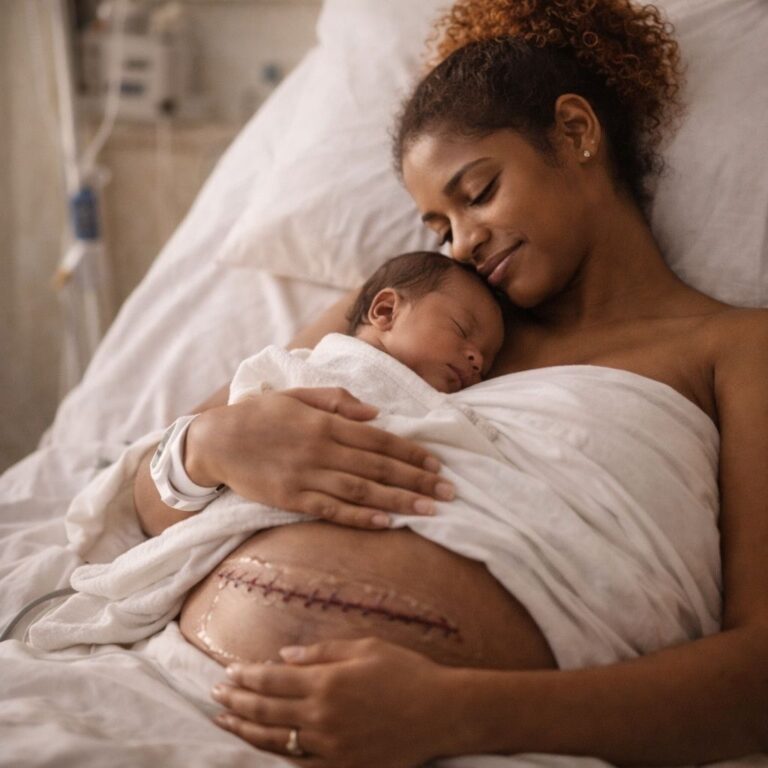
A cesarean section (C-section) is a surgical procedure used to deliver a baby through incisions in the abdomen and uterus, and like any surgery, it carries both benefits. Depending on your specific situation, your healthcare expert will be able to explain what these mean for you.
Understanding the potential benefits and risks of a C-section can help you make informed decisions about your birth plan in discussion with your healthcare provider. What this means for you will be determined by several factors, including whether you are having a scheduled or emergency c-section, your overall health, and the well-being of your baby.
During your pregnancy, your midwife or doctor will discuss the benefits and dangers of both cesarean and vaginal births. They will discuss your preferences, concerns, and future pregnancy goals to assist you in considering your delivery alternatives..
When would I need a C-section?
You may need a C-section if you have certain medical conditions or if complications occur during labour in a vaginal delivery. A planned (scheduled) C-section may be recommended when certain medical conditions or risk factors are present, including: conditions exist:
- Cephalopelvic disproportion (CPD): A situation where the baby’s head or body may be too large to safely pass through the mother’s pelvis, or the pelvis may be too small for vaginal delivery.
- Previous C-section: Although it’s possible to have a vaginal birth after a previous C-section, it’s not an option for everyone. Factors that can affect this include the type of uterine incision used in the previous C-section and the risk of uterine rupture.
- Expecting multiples: Although twins can often be delivered vaginally, two or more babies might require a C-section.
- Placenta previa: In this condition, the placenta is attached too low in your uterus and blocks your baby’s exit through your cervix.
- Transverse lie: Your baby is in a horizontal, or sideways, position in your uterus.
- Breech presentation: In a breech presentation, your baby is feet- or bottom-first in your uterus. Some providers may attempt to turn your baby, but a C-section will be necessary if that’s unsuccessful.
- Health conditions: Certain medical conditions, such as significant heart disease, may make vaginal birth higher risk. A C-section is recommended if there is an active genital herpes infection at the time of delivery to reduce the risk of neonatal transmission.
- Obstruction: A large uterine fibroid, a pelvic fracture or you’re expecting a baby with certain congenital anomalies may also be reasons for a C-section.
An unplanned (emergency) C-section may become necessary if complications arise during labour, such as;
At Mylurah we’re building a digital platform that centers Black women’s reproductive journeys, including culturally sensitive support for Period, Pregnancy and Postpartum. Because representation in care isn’t optional, it’s essential.
Fetal distress: Concerning changes in the baby’s heart rate pattern during labour that suggest the baby may not be tolerating labour well.
Labour isn’t progressing(prolonged or arrested labour): When cervical dilation slows or stops, or the baby does not continue descending through the birth canal despite adequate contractions.
Umbilical cord compression: The umbilical cord is looped around your baby’s neck or body or caught between your baby’s head and your pelvis.
Umbilical cord prolapse: The umbilical cord comes out of your cervix before your baby does.
Placental abruption: The placenta separates from the wall of your uterus before your baby is born.
By joining MyLurah community group, you can take advantage of the platform and improve your chances of meeting people of like mind who are ready to listen to you and offer solutions anytime.
What does a C-section feel like?
You will receive regional anesthesia (such as spinal or epidural), which prevents pain but allows you to remain awake; in some emergencies, general anesthesia may be required. Most people report feeling a tug or pull when their baby is removed from their abdomen.
Are C-sections safe?
Vaginal birth is often recommended when medically appropriate because it typically involves shorter recovery time and fewer surgical risks; however, in certain situations, a C-section is the safer option for mother or baby.
WRAP UP
C-sections are an important and sometimes life-saving surgical option for childbirth when medically indicated, such as in cases of prolonged labour, fetal distress, abnormal fetal position, placenta complications, or other high-risk conditions.
In these cases, a C-section can protect both mom and baby when vaginal birth could be dangerous. At the same time, it’s important to recognize that a C-section is a major surgery with its own risks, including longer recovery, infection, increased bleeding, and possible implications for future pregnancies.
The decision should always be guided by medical advice and your personal situation. Ultimately, the goal is a safe delivery and healthy outcomes for both mother and child, and when used appropriately, C-sections play a vital role in achieving that, although they are major surgical procedures and are generally recommended when the benefits outweigh the risks.