
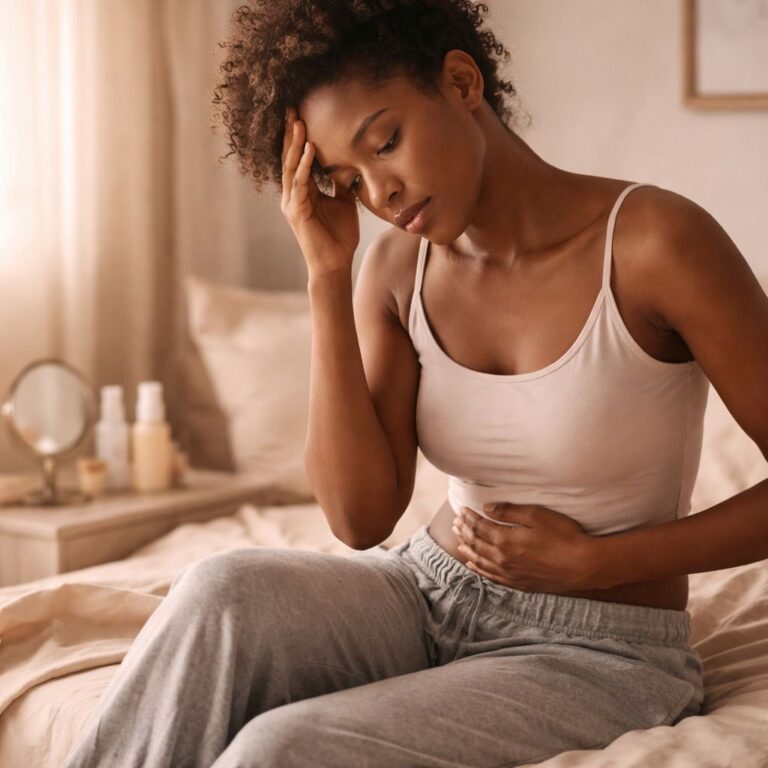
Polycystic Ovary Syndrome (PCOS) is more than just a medical term, for many Black women, it’s a lived experience filled with confusing symptoms, emotional ups and downs, and a long search for answers.
Imagine constantly battling unexplained weight gain, stubborn acne, irregular periods, or excessive hair growth, yet being told “it’s normal” or “just stress.” Many Black women face these signs daily without realizing they may be linked to PCOS.
The condition often goes unnoticed or misunderstood, partly because its symptoms can show up differently in each woman. Understanding these signs is the first step toward healing, balance, and reclaiming control over one’s body and confidence.
Key Point
- Understanding What PCOS Is
- Common Signs and Symptoms of PCOS in Black Women
- How PCOS Shows Up in Black Women Specifically
- Why is PCOS so prevalent and so under-addressed in Black women?
Understanding What PCOS Is
Polycystic ovary syndrome (PCOS) is a common hormonal condition that affects women of reproductive age. It usually starts during adolescence, but symptoms may fluctuate over time.
PCOS can cause hormonal imbalances, irregular periods, excess androgen levels, and cysts in the ovaries.
Irregular periods, which always come usually with a lack of ovulation, can make it difficult to become pregnant. PCOS is a leading cause of infertility. PCOS is a chronic condition and cannot be cured.
However, some symptoms can be improved through lifestyle changes, medications, and fertility treatments. The cause of PCOS is unknown, but women with a family history or type 2 diabetes are at higher risk.
‘Mylurah is your culturally rooted wellness space built for African women tracking their periods, pregnancies, and postpartum healing.”
Common Signs and Symptoms of PCOS in Black Women
According to Rebecca E. Campbell, Ph.D., et al. (2017), PCOS is a broad-spectrum disorder unlikely to stem from a single common origin. Despite the prevalence of PCOS, there isn’t a clear understanding of its cause. However, the role of androgens in PCOS is well understood and recognized as being responsible for the development and manifestation of PCOS and other related conditions that often accompany PCOS. In addition, multiple genetic and environmental factors play an important role in the occurrence of PCOS (Ritu Deswal et al., 2020).
The most common sign of PCOS Is
- Acne
- Alopecia
- Infertility
- Weight gain or trouble losing weight
- Male-pattern baldness or thinning hair
- Hirsutism
- Hyperpigmentation (skin that looks darker than your natural skin tone because of the overproduction of melanin), especially around creases in skin and facial and neck hair
- Irregular or infrequent periods
- Ovaries with multiple cysts
- High levels of androgens
- Metabolic signs like insulin resistance, cardiovascular risk, and type 2 diabetes risk.
Symptoms of PCOS are never limited to race, ethnicity, genetics, and environmental disparities. For example, certain symptoms are more prevalent in one ethnicity compared to others.
According to health journalist Vanessa Haye (2021), the variability in symptoms and how they present in different people means that up to 75% of women with PCOS do not receive a diagnosis for their condition.
Black women are disproportionately affected by PCOS, and according to health journalist Lisa Basile (2020), PCOS affects women of colour more frequently and severely.
“By joining MyLurah community group, you can take advantage of the platform and improve your chances of meeting people of like mind who are ready to listen to you and offer solutions anytime.”
How PCOS Shows Up in Black Women Specifically
Many Black women, especially those with PCOS, have reported that they sometimes feel ‘invisible’ when it comes to seeking help from medical practitioners. Some Black women have become familiar with healthcare gaslighting, the repeated denial of someone’s reality in an attempt to invalidate or dismiss their health concerns.
For instance, women have reported experiences in which their PCOS symptoms were dismissed due to their high body mass index (BMI).
BMI is often used as a measurement of whether a person is underweight or overweight or falling within a normalized range, but it doesn’t distinguish between excess fat, muscle, or bone mass.
Doctors simply instructed these patients to lose weight instead of paying more attention to the other symptoms the patients were concerned about (Haye, 2021).
Diagnosis and Treatment
Diagnosis:
PCOS cannot be diagnosed with basic tests such as blood tests, cultures, or biopsies. Instead, the diagnosis of PCOS is given after a process termed “differential diagnosis” in which all more common disorders associated with the symptoms are ruled out. A diagnosis of PCOS can usually be made if two of the following three criteria have been met:
- Irregular or infrequent periods
- The presence of high amounts of androgens
- The presence of polycystic ovaries in scans
𝐓𝐫𝐞𝐚𝐭𝐦𝐞𝐧𝐭 𝐨𝐩𝐭𝐢𝐨𝐧𝐬 𝐝𝐨𝐧’𝐭 𝐚𝐥𝐰𝐚𝐲𝐬 𝐫𝐞𝐟𝐥𝐞𝐜𝐭 𝐥𝐢𝐯𝐞𝐝 𝐫𝐞𝐚𝐥𝐢𝐭𝐢𝐞𝐬.
Depending on the patient’s history, management is individualized, but general treatment is hormonal contraception. Patients are advised to visit their general practitioner.
Also from metabolic risks like diabetes and high blood pressure to cultural food practices and body image pressures, treatment plans often fail to consider the whole woman, especially in Black communities.
𝐌𝐞𝐧𝐭𝐚𝐥 𝐡𝐞𝐚𝐥𝐭𝐡 𝐢𝐬 𝐝𝐞𝐞𝐩𝐥𝐲 𝐢𝐦𝐩𝐚𝐜𝐭𝐞𝐝.
The emotional burden of PCOS, from anxiety and depression to body shame, is amplified when women are told their concerns are “normal” or “not serious.”
At Mylurah we’re building a digital platform that centers Black women’s reproductive journeys, including culturally sensitive support for PCOS. Because representation in care isn’t optional, it’s essential.
𝐖𝐡𝐲 𝐢𝐬 𝐏𝐂𝐎𝐒 𝐬𝐨 𝐩𝐫𝐞𝐯𝐚𝐥𝐞𝐧𝐭 𝐚𝐧𝐝 𝐬𝐨 𝐮𝐧𝐝𝐞𝐫-𝐚𝐝𝐝𝐫𝐞𝐬𝐬𝐞𝐝 𝐢𝐧 𝐁𝐥𝐚𝐜𝐤 𝐰𝐨𝐦𝐞𝐧?
𝐖𝐡𝐲 𝐢𝐬 𝐏𝐂𝐎𝐒 𝐬𝐨 𝐩𝐫𝐞𝐯𝐚𝐥𝐞𝐧𝐭 𝐚𝐧𝐝 𝐬𝐨 𝐮𝐧𝐝𝐞𝐫-𝐚𝐝𝐝𝐫𝐞𝐬𝐬𝐞𝐝 𝐢𝐧 𝐁𝐥𝐚𝐜𝐤 𝐰𝐨𝐦𝐞𝐧?
PCOS (Polycystic Ovary Syndrome) affects up to 1 in 10 women globally, but Black women face a unique intersection of risk and neglect when it comes to diagnosis, treatment, and awareness.
𝐔𝐧𝐝𝐞𝐫𝐝𝐢𝐚𝐠𝐧𝐨𝐬𝐢𝐬 𝐢𝐬 𝐫𝐞𝐚𝐥.
Black women are less likely to be diagnosed with PCOS even when they present with clear symptoms like irregular periods, hair loss, or fertility issues. This is often due to medical bias, dismissal of pain or symptoms, and limited access to reproductive specialists.
𝐑𝐞𝐬𝐞𝐚𝐫𝐜𝐡 𝐠𝐚𝐩𝐬 𝐩𝐞𝐫𝐬𝐢𝐬𝐭.
Most PCOS research has historically excluded women of African descent. That means less data, less targeted support, and more confusion for women navigating symptoms that aren’t being recognized or treated appropriately.
Complication
Complications of PCOS can include:
- Infertility
- Gestational diabetes or pregnancy-induced high blood pressure
- Miscarriage or premature birth
- Nonalcoholic steatohepatitis, a severe liver inflammation caused by fat buildup in the liver
- Metabolic syndrome, a cluster of conditions including high blood pressure, high blood sugar, and unhealthy cholesterol or triglyceride levels that significantly increase your risk of heart and blood vessel (cardiovascular) disease
- Type 2 diabetes or prediabetes
- Sleep apnea
- Depression, anxiety and eating disorders
- Cancer of the uterine lining (endometrial cancer)
- Obesity commonly occurs with PCOS and can worsen complications of the disorder.
In Conclusion
PCOS is more than a hormonal imbalance, it’s a reality that many Black women silently struggle with, often without the proper support or understanding.
The condition shows up differently in every woman, and for Black women, it can be intensified by cultural silence, misdiagnosis, and limited awareness in healthcare systems.
Recognizing the signs early and creating open conversations about reproductive health can make a real difference.
By encouraging education, empathy, and accessible healthcare, we can help more women find answers, healing, and confidence.
Every shared story and every conversation helps another woman feel seen and supported. PCOS may be common, but with the right knowledge and care, no woman should feel alone in her journey.


Pingback: Why Black Women Experience Fibroids More Often – Mylurah
Pingback: Period Blood Colour: What it means to your health, especially for anemia in African Women – Mylurah
Pingback: Heavy Periods in Black Women – Mylurah
Hi Lurah
I was recently diagnosed with PCOS and it’s been really difficult for me..what medication should I begin with to help me especially with the irregular cycles,excess weight