For millions of women, hormonal contraception is a reliable and convenient part of daily life. But what happens when you decide to stop?
For some women, coming off hormonal birth control whether the pill, patch, injection, or hormonal coil triggers a range of unexpected physical and emotional symptoms.
This experience is increasingly referred to as Post-Birth Control Syndrome. While it is not yet a formally recognised medical diagnosis, the symptoms are very real for the women who experience them, and awareness of this transition is important for making informed decisions about reproductive health.
What Is Post-Birth Control Syndrome
Post-Birth Control Syndrome refers to a collection of symptoms that can emerge in the weeks and months following the discontinuation of hormonal contraception.
Hormonal birth control works by overriding the body’s natural hormonal cycle typically often suppressing ovulation and altering hormonal patterns. When contraception is stopped, the body must recalibrate and resume its natural hormonal rhythm.
For some women this process is smooth and swift, but for others it can take months, during which the body experiences a significant hormonal readjustment.
At Mylurah we’re building a digital platform that centers Black women’s reproductive journeys, including culturally sensitive support for Period, Pregnancy and Postpartum. Because representation in care isn’t optional, it’s essential.
Common Symptoms
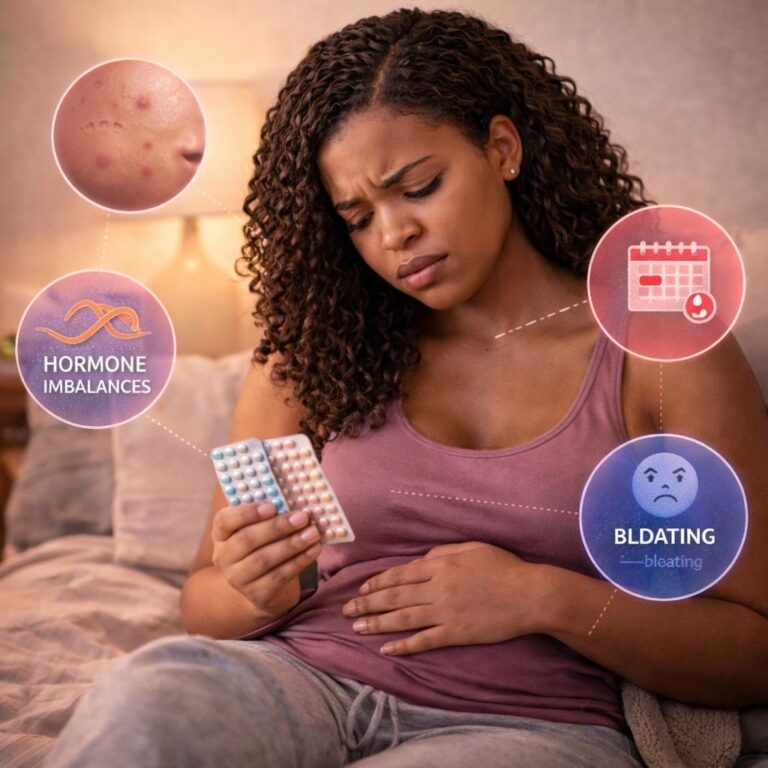
The symptoms of Post-Birth Control Syndrome vary widely between individuals and depend on the type of contraception used, the duration of use, and the individual’s underlying hormonal health. Common experiences include:
- Irregular or absent periods in the months following cessation
- Acne flare-ups, particularly along the jawline and chin
- Mood changes including anxiety, low mood, and irritability
- Hair thinning or increased hair shedding
- Bloating and digestive disturbances
- Fatigue and low energy levels
- Reduced libido
- Headaches and migraines
- Breast tenderness
- A temporary delay in the return of regular ovulation in some women, although fertility generally returns to baseline
It is important to understand that not every woman will experience these symptoms. Some women transition off hormonal contraception with little disruption, while others find the adjustment period significantly challenging.
Why Does This Happen
When contraception is stopped, the body’s own hormone production must restart a process that does not always happen immediately or smoothly.
Additionally, some studies suggest that hormonal contraception may be associated with lower levels of certain nutrients, although the clinical significance of this is still being studied.
There is emerging research exploring the relationship between hormonal contraception and the gut microbiome, although this area is not yet fully understood.
Supporting Your Body Through the Transition
While some adjustment is unavoidable, there are practical steps that can support your body as it recalibrates.
Nourish your body with whole foods. A diet rich in vegetables, healthy fats, lean proteins, and fibre supports hormone production and liver detoxification both essential during the transition period. Reducing sugar and processed foods helps stabilise blood sugar and minimise hormonal fluctuations.
Replenish key nutrients. Consider foods rich in zinc, magnesium, and B vitamins such as leafy greens, nuts, seeds, eggs, and legumes. Speak to a healthcare provider before starting any supplements.
Support your gut health. Including fermented foods and fibre in your diet helps restore a healthy gut microbiome, which in turn supports hormonal balance and oestrogen elimination.
Track your cycle. Using a symptom and cycle tracking app or diary helps you identify patterns, understand your returning cycle, and provide useful information if you consult a healthcare provider.
Manage stress. High cortisol levels can further suppress ovulation and delay hormonal recovery. Prioritising sleep, movement, and stress management practices is particularly valuable during this period.
Be patient with your body. For most women, the body finds its natural rhythm within three to six months. Understanding that this is a transition not a permanent state can reduce anxiety and support a more positive experience.
By joining MyLurah community group, you can take advantage of the platform and improve your chances of meeting people of like mind who are ready to listen to you and offer solutions anytime.
In All You Do:
Coming off hormonal birth control is a significant transition for the body, and the symptoms that follow are neither imagined nor unusual.
Post-Birth Control Syndrome is a growing area of awareness that deserves more open conversation and medical attention. Every woman’s experience is unique, and honouring that experience rather than dismissing it is essential.
If your symptoms following the cessation of hormonal contraception are severe, prolonged, or significantly affecting your quality of life particularly absent periods beyond three months, extreme mood disturbances, or heavy hormonal acne please consult a qualified medical practitioner.
A healthcare professional can investigate underlying hormonal conditions, assess nutrient levels, and provide guidance tailored to your individual needs. Do not hesitate to seek the care you deserve.