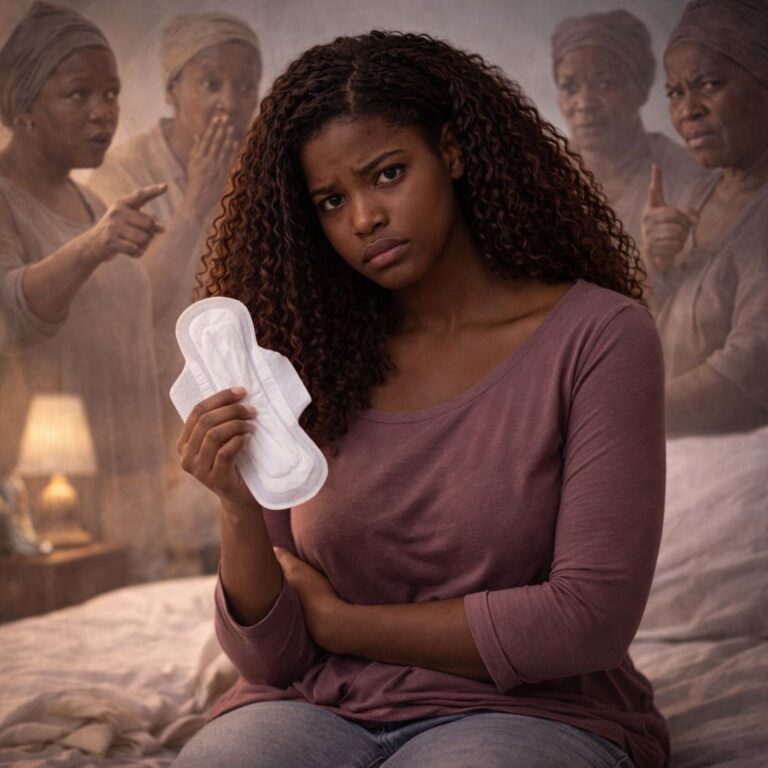
At Mylurah, we’ve connected with thousands of African women who share stories about period beliefs passed down through generations. While we deeply respect our cultural traditions, some myths can actually harm women’s health and well-being.
This post separates fact from fiction not to dismiss our heritage, but to empower women with knowledge that honours both tradition and health science.
1. You can’t wash your hair during your period.
Many African women believe washing hair during menstruation causes headaches, stops menstrual flow, or makes cramps worse. This belief is common across various cultures and is often passed down through generations. However, there’s no medical reason to avoid washing your hair during periods.
Your menstrual cycle doesn’t affect hair cleansing, and maintaining excellent hygiene is actually more important during this time. In fact, a warm shower can help relieve period cramps through heat therapy. Feel free to keep your regular hair care routine throughout your cycle.
2. Swimming during period is dangerous.
Swimming during menstruation is often discouraged due to fears that water will enter your body, cause infections, or make your period heavier. Some women worry about leakage or believe water pressure could be harmful.
The reality is quite different; water pressure actually prevents menstrual flow while you’re swimming, making it completely safe. Swimming is excellent gentle exercise that can help with period pain relief. If you’re comfortable using tampons or menstrual cups, you can swim freely during your period.
There’s no medical reason to avoid pools, lakes, or oceans during menstruation.
3. You can’t cook or touch plants during menstruation.
The belief that menstruating women shouldn’t cook food or touch plants stems from traditional concepts of “impurity” during menstruation. Some cultures teach that a woman’s touch during her period will spoil food or cause plants to wither and die. This myth has no scientific foundation whatsoever.
Menstruation doesn’t affect your ability to prepare food safely or care for plants. You’re the same person experiencing a completely natural bodily function.
Your hormones don’t emanate through your fingertips to affect food or vegetation. Continue with your normal cooking and gardening activities throughout your cycle without any concerns.
4. Heavy period mean you’re more fertile.
Many women equate heavier menstrual flow with better reproductive health and higher fertility, believing that more blood indicates a more fertile womb. This connection seems logical but isn’t medically accurate.
Heavy periods can actually signal underlying health issues like uterine fibroids, hormonal imbalances, or other conditions that may affect fertility. Normal fertility isn’t determined by how heavy or light your flow is; it depends on factors like ovulation regularity, egg quality, and overall reproductive health.
If your periods are consistently very heavy (requiring pad or tampon changes every hour), it’s worth consulting a healthcare provider to rule out any underlying conditions.
5. You can’t get pregnant during your period.
The assumption that menstruation equals infertility leads many women to believe unprotected sex during periods is safe from pregnancy. This dangerous misconception ignores important biological facts about fertility. Sperm can survive in the female reproductive tract for up to five days, waiting for an egg to fertilize.
If you have a shorter menstrual cycle or irregular periods, you could ovulate shortly after your period ends, potentially leading to pregnancy from sperm that entered during menstruation. While the likelihood is lower during your period, it’s never zero.
Consistent contraception use is essential regardless of where you are in your menstrual cycle if you’re avoiding pregnancy.
6. Period pain is punishment for being a woman.
Cultural and religious interpretations sometimes frame severe menstrual pain as an inevitable part of womanhood, something women must endure as their natural fate or even punishment.
This harmful belief prevents many women from seeking relief for debilitating period pain. While mild cramping during menstruation is normal, severe pain that disrupts your daily life, work, or school isn’t something you should simply accept.
Extreme period pain could indicate underlying conditions like endometriosis, fibroids, or other treatable medical issues. Every woman deserves to live comfortably during her period, and effective pain management options are available from over-the-counter medications to prescription treatments and lifestyle approaches.
7. Using tampons takes away virginity.
The fear that inserting tampons breaks the hymen and somehow affects virginity status prevents many young women from using what could be a comfortable period product option. This myth conflates hymen integrity with virginity and sexual experience.
Simply put, the hymen is a thin tissue that can be stretched or torn by various everyday activities such as exercise, normal physical movement, medical exams, or the use of tampons.
Modern medical understanding recognizes that virginity is about sexual experience with another person, not the state of hymenal tissue. Your choice of period products should be based on personal comfort, lifestyle needs, and preference, not concerns about virginity or cultural concepts of purity.
8. You should avoid exercise during periods.
Traditional beliefs often portray menstruating women as weak or fragile, leading to recommendations to avoid physical activity during periods.
Some worry that exercise will make symptoms worse or somehow harm the body during menstruation. Research actually shows the opposite: exercise can significantly help reduce period pain, improve mood swings, reduce bloating, and can even help regulate irregular cycles.
Light to moderate exercise like walking, swimming, yoga, or gentle strength training can be particularly beneficial during menstruation.
The key is listening to your body’s actual needs rather than following blanket restrictions. If you feel energized enough to exercise, go ahead. If your body needs rest on certain days, that’s perfectly fine too.
9. Irregular periods mean something is seriously wrong.
The widespread belief that menstrual cycles must follow a perfect 28-day pattern causes unnecessary anxiety when women experience cycle variations.
Many assume any deviation from this “ideal” indicates serious health problems requiring immediate medical intervention. In reality, normal menstrual cycles can range anywhere from 21 to 35 days, and occasional irregularities are completely common.
Factors like stress, significant diet changes, intense exercise, travel, illness, or major life transitions can temporarily affect cycle regularity. Age also plays a role; teenagers and women approaching menopause often experience more irregular cycles.
The key is tracking your personal patterns over several months to understand what’s normal for your body versus when genuine concerns arise.
10. You can’t pray or enter sacred spaces during menstruation.
Religious restrictions around menstruation exist across many cultures and faiths, often teaching that menstruating women are spiritually impure and shouldn’t participate in religious activities or enter sacred spaces. These restrictions vary significantly by religious interpretation, community practices, and individual beliefs.
From a medical standpoint, menstruation is simply a natural bodily function with no bearing on spiritual worthiness or purity. Many progressive religious leaders and communities now recognise that natural biological processes don’t affect one’s relationship with God.
Ultimately, your spiritual practices during menstruation are deeply personal decisions that should bring you comfort and peace, not shame or exclusion from your faith community.
Women Also Ask
Start by asking questions about their experiences and showing interest in their stories. Share new information gently, emphasizing that you're learning, not correcting. Yes! Many traditional remedies like certain herbal teas, warm baths, and rest are genuinely helpful for period symptoms. If you have severe pain, very heavy bleeding, periods lasting over 7 days, or cycles shorter than 21 days or longer than 35 days consistently. Note start/end dates, flow heaviness, symptoms, and mood changes. Apps like Mylurah help you understand patterns in culturally familiar language. How do I talk to my mother/grandmother about these myths respectfully?
Are there any traditional practices that actually help?
When should I see a doctor about my period?
How can I track my cycle effectively?
Wrapping Up
Understanding your period shouldn’t mean abandoning your culture; it means making informed choices about your health.
Every woman deserves accurate information to make decisions that work for her body and her life.
Ready to track your cycle with cultural understanding? Join thousands of African women using Mylurah to understand their bodies better. Our app uses familiar language and respects cultural context while providing medically accurate information.